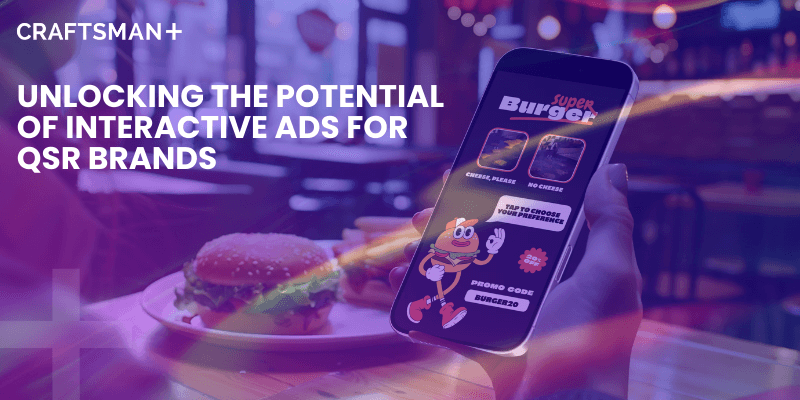
Unlocking the Potential of Interactive Ads for QSR Brands
Interactive ads
Jan 11, 2026
For Quick Service Restaurants (QSRs), creating memorable and engaging customer experiences is crucial for brand differentiation and business success. Interactive advertising offers a powerful tool for QSR brands to enhance their marketing strategies, increase purchases, and strengthen brand identity. In this blog, explore the potential of interactive ads in multichannel marketing campaigns.
The Power of Interactivity in QSR Marketing
Interactive ads can significantly enhance customer engagement for QSR brands by creating personalized, engaging, and memorable experiences across various digital channels.
Personalized Messaging: Use data like past purchases and location to deliver tailored offers and recommendations.
Dynamic Display Ads: Adapt content based on user actions, such as showcasing breakfast items in the morning and dinner options later in the day.
Gamification and Rewards: Incorporate fun, rewarding elements that encourage repeated engagement through challenges or points.
Location-Based Marketing: Use geofencing to target customers near a restaurant with timely promotions to increase foot traffic.
Rich Media Elements: Embed maps, carousels, and videos to allow customers to explore menus and locate stores immersively.
Interactive Ads Enhance Brand Choice
According to a report by Digital Turbine, three primary types of ad interactivity drive brand choice:
Browse: Accessing information via hotspots or galleries (increases brand choice by 31.5%).
Sample: Visual interaction with products (increases brand choice by 29.6%).
Play: Integrating brands into game environments (increases brand choice by 36.6%).
The Psychology Behind Interactive Ads in QSR Marketing
What makes interactive ads so successful? They leverage core consumer psychological triggers:
Scarcity and Urgency
Limited-time offers play on the "fear of missing out" (FOMO), prompting consumers to act swiftly on exclusive deals.
Nostalgia and Emotional Connection
Reviving classic menu items taps into positive memories, enhancing brand loyalty and encouraging repeat purchases.
Sensory Appeal
High-quality visuals in rich media ads stimulate hunger by making food appear more appetizing and presentation-focused.
Targeting Users at Key Times
Dynamic Delivery: Serving specific content (breakfast vs. dinner) based on the current time of day.
Convenience Factors: Using geofencing to capitalize on "nearby" searches and immediate hunger needs.
Multichannel Journey: Maintaining consistent engagement across mobile apps, social, and even in-car screens.
Real Use Cases for QSR Brands
Starbucks: Effectively links in-store actions with their mobile rewards app to create a seamless multichannel experience.
McDonald's: Utilizes time-of-day dynamic ads to ensure menu relevancy at all hours.
Taco John's: Incorporated interactive maps and menu carousels to drive local foot traffic.
Uber and T-Mobile JourneyTV: An innovative partnership engaging riders in-car with personalized restaurant recommendations.
Quick Takeaways (TL;DR)
Interactive ads are a vital component for QSRs, utilizing personalization, gamification, and location data to boost brand recall and sales. By harnessing these innovative formats, brands can stand out in a crowded, competitive landscape.
Ready to elevate your QSR marketing? Contact CRAFTSMAN+ today to discover how our creative platform can transform your brand's digital presence.





Unlocking the Potential of Interactive Ads for QSR Brands