
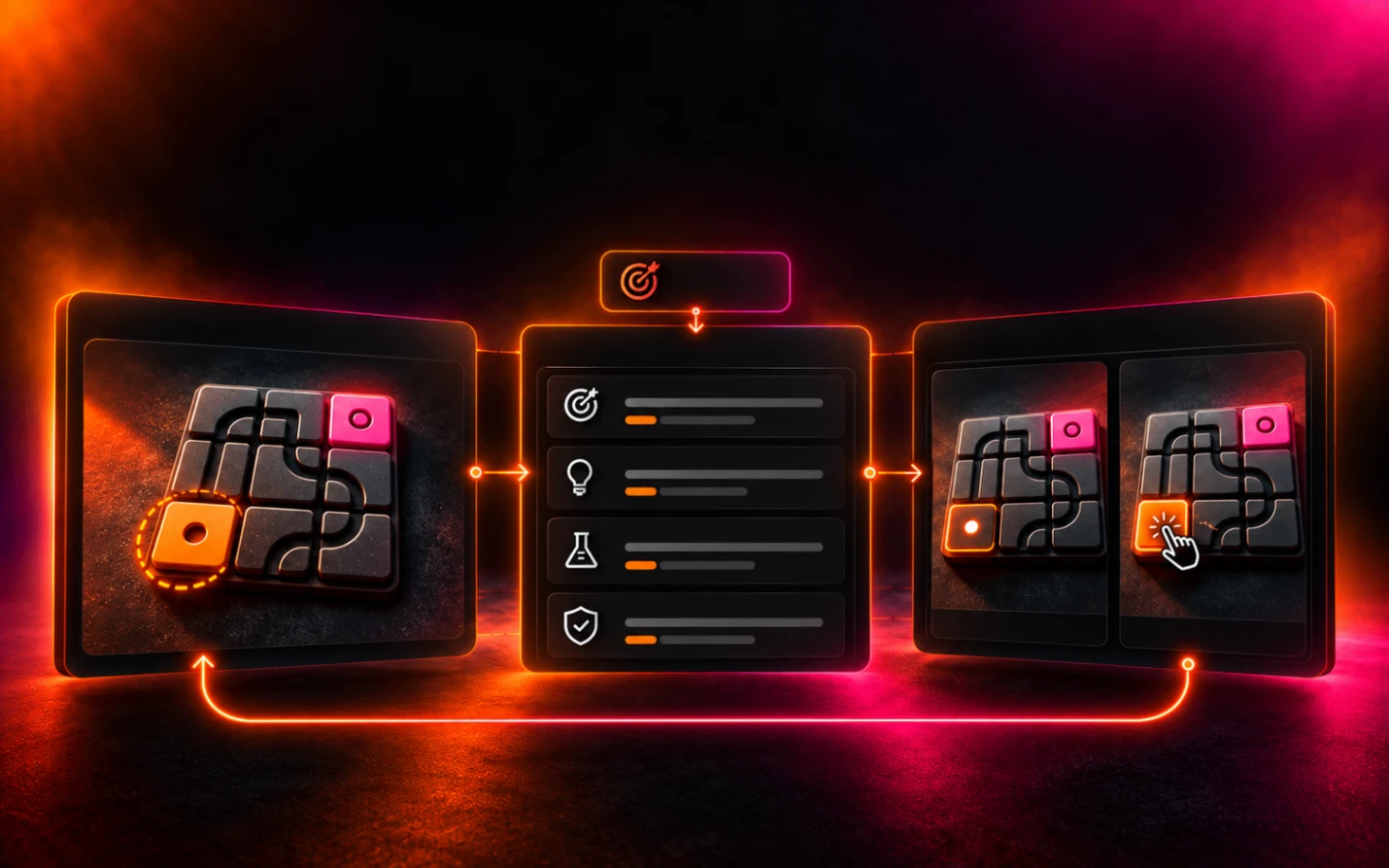
The next creative brief should start with what the business needs to achieve and what the last campaign taught us.
That sounds straightforward. The harder part is turning performance data into a decision quickly enough to shape the next build. A report can tell us what happened. A useful brief gives the team a direction, a reason to pursue it and a way to find out whether it worked.
As more campaign execution becomes automated, that handoff deserves more attention. The opportunity is to shorten the time between learning something and putting it to work.
Two signals worth connecting
In its September 30 unBoxed recap, Amazon described Full-Funnel Campaigns as a workflow where advertisers set a goal and AI handles channel mix, creative, audiences and optimization. The conversational experience in Amazon Ads Agent is in expanded closed beta.
Separately, Kroger, Vidmob and MMA Global published research using past creative data to predict conversion. The study covered 1,934 assets, with a model trained on 2025 campaign data and validated against a separate Q1 2026 dataset. The researchers reported stronger results for Kroger creative built around relatable human experiences than for product-first or transactional shopping imagery.
Those are separate developments, and the Kroger findings are specific to a vendor-involved study of one advertiser. The connection I see is practical: as platforms take on more execution, teams need a better way to feed relevant learning into the decisions that guide it.
Start with the business outcome
Before choosing a concept, agree on the primary measure of success. Is the priority more purchases at a sustainable acquisition cost, stronger conversion after a click, or installs that lead to engaged players?
That choice determines which evidence matters. Click-through rate can help explain whether an opening attracts attention. If the business needs purchases, it cannot answer the whole question.
A brief should name the outcome, the primary KPI and any supporting measures the team will use to interpret the result. That gives creative strategy a specific problem to solve.
Use intelligence to give the strategist a direction
This is where creative intelligence becomes useful. Bring performance observations together with the creative choices behind them: the opening, message, demonstration, interaction or call to action. Keep the audience, placement and measurement period attached so the team can judge whether a pattern is relevant.
The strategist’s job is to turn that evidence into a promising direction and explain what still needs testing.
There is a practical connection here to CRAFTSMAN INTELLIGENCE. Its documented Creative Strategy capabilities include trends, competitor insights and data-backed guidance for the next build. Analytics Insights supports examining project performance, comparing variants and identifying drop-off points. The product is in beta, so teams should check the data and capabilities available for their project.
Used in a briefing process, those inputs can help a strategist narrow the next creative question. The value comes from how that question informs production and measurement.
Turn the direction into a hypothesis
Consider a hypothetical playable campaign whose goal is to acquire engaged players. The available interaction data suggests that people leave before completing the first move.
One hypothesis might be: “The opening asks people to interpret too much before they can act. A clearer first-move cue may help more people experience the mechanic.”
Now the team has a focused brief. Build a variation around the opening cue, keep the mechanic and product promise consistent, and decide how to evaluate the result before launching. Interaction and completion signals can help diagnose the experience; acquisition and downstream engagement help assess its business value.
That is a more useful starting point for production than a general request for more versions.
Measure, then choose the next variation
Once results are available, return to the hypothesis. Did the change address the observed problem? Did the primary outcome improve? Were there differences in audience or delivery that make the comparison uncertain?
Use that assessment to choose the next variable. If the opening becomes clearer but people still leave after the first action, feedback or progression might be the next question. An inconclusive result may call for a better comparison before another creative change.
This is where CRAFTSMAN+’s creative offering fits the process: strategy and art direction, playable production, and creative variants and testing. The business reason for connecting those disciplines is to help each round of production answer a question that matters to performance.
Keep brand requirements, approved claims and an accurate product experience in the brief throughout. They should guide every variation as the team learns.
For the next review, I would ask: can we trace this creative choice back to a business outcome, a piece of evidence and a question we intend to test?
When that connection is clear, the brief becomes a working link between what the team has learned and what it builds next.
The workflow and playable example are editorial interpretation, not reported client results. Product capabilities and research are attributed to the linked sources.